Location: Belgium Wallonia Hastière
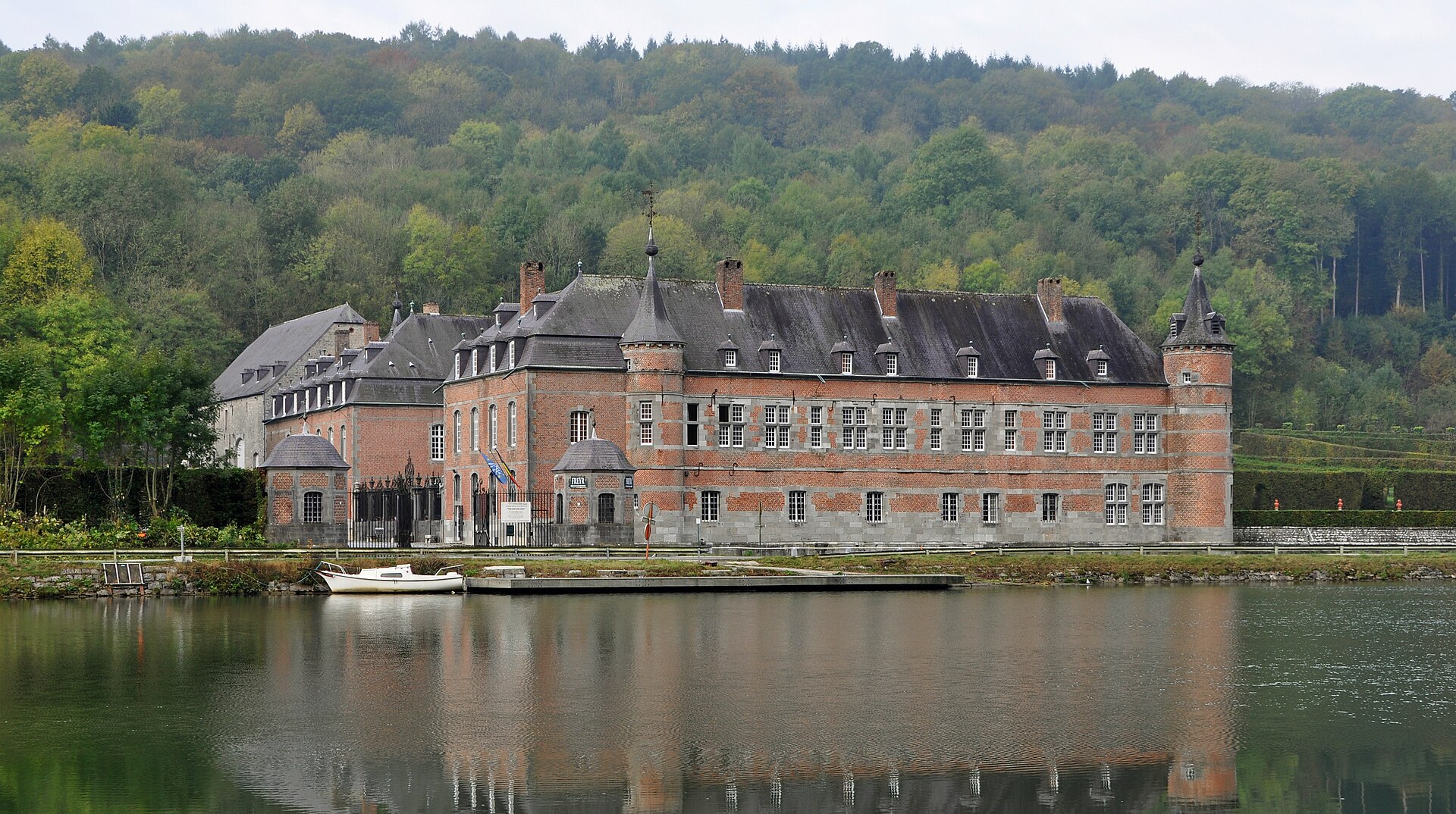
Renaissance castle on the bank of the Meuse at Hastière, with gardens said to follow the model of Versailles, old orange trees and what is considered Belgium's oldest orangery.
Interesting facts
- The castle has belonged to the same family since 1410.
- In October 1675 a customs and trade agreement between France and Spain was signed here.
- The gardens have around six kilometres of hedge-lined paths.
Why visit
- Renaissance castle right on the Meuse
- Gardens with old orange trees
- Open to visitors
The Castle of Freÿr lies on the left bank of the Meuse in the municipality of Hastière, opposite the Rocks of Freÿr. In the 14th century a castle here guarded a ford; troops of the French king Henry II destroyed it in 1554. In 1571 a Renaissance country house was built on the site, and its east wing survives to this day.
In 1637 the complex grew into a four-wing building around a courtyard, and in the 18th century it was remodelled as a ducal residence, reportedly on the model of Versailles. It has belonged to the same family since 1410, first the Beaufort-Spontin family and today their descendants. In October 1675 envoys of Louis XIV and Charles II of Spain met here to sign a customs and trade agreement.
The castle is still lived in and is open to visitors. Its orangery is considered the oldest in Belgium, and orange trees around 300 years old stand in the gardens.
History
14th-century castle at a ford on the Meuse, destroyed in 1554; Renaissance country house in 1571 (today's east wing); four-wing complex in 1637; ducal residence in the 18th century. Owned by the same family since 1410. Customs and trade agreement between France and Spain signed here in 1675.
Special features
Renaissance castle with four wings on the bank of the Meuse, gardens with orange trees around 300 years old and six kilometres of hedge-lined paths, and an orangery considered the oldest in Belgium.
Map
Opens an external route planner. Please check access and opening times before you set off.
Nearby
Trou Magrite
Dinant, Wallonia
1.8 km away
Prehistoric cave above the River Lesse at Pont-à-Lesse (Dinant) – site of a 3.8-centimetre ivory figurine and of Neanderthal remains.
Route
Church of Saint Anne, Anseremme
Dinant, Wallonia
1.9 km away
Neo-Gothic church of 1906–1907 at the confluence of the Lesse and the Meuse in Anseremme – with a 12th-century baptismal font.
Route
Walzin Castle
Dinant, Wallonia
2.6 km away
Castle on a rock more than 50 metres high above a bend of the River Lesse near Dinant – privately owned and only visible from outside.
Route
Rocher Bayard, Dinant
Dinant, Wallonia
3.1 km away
A rock needle about 40 metres high on the Meuse between Dinant and Anseremme – split, according to legend, by the hoof of the magic horse Bayard.
RouteLa Naulette Cave
Dinant, Wallonia
3.3 km away
Cave on the left bank of the Lesse near Dinant – in 1866 a Neanderthal jaw was found here, early evidence for Darwin's theory.
Route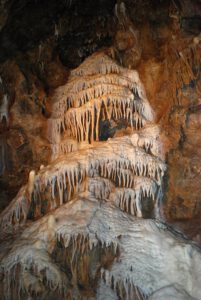
La Merveilleuse Cave
Dinant, Wallonia
3.4 km away
Show cave near Dinant, discovered in 1904 during the construction of a light railway – with calcite cascades and an underground river.
Route
Sources
Image: Marc Ryckaert (MJJR) · CC BY 3.0 · Wikimedia Commons
